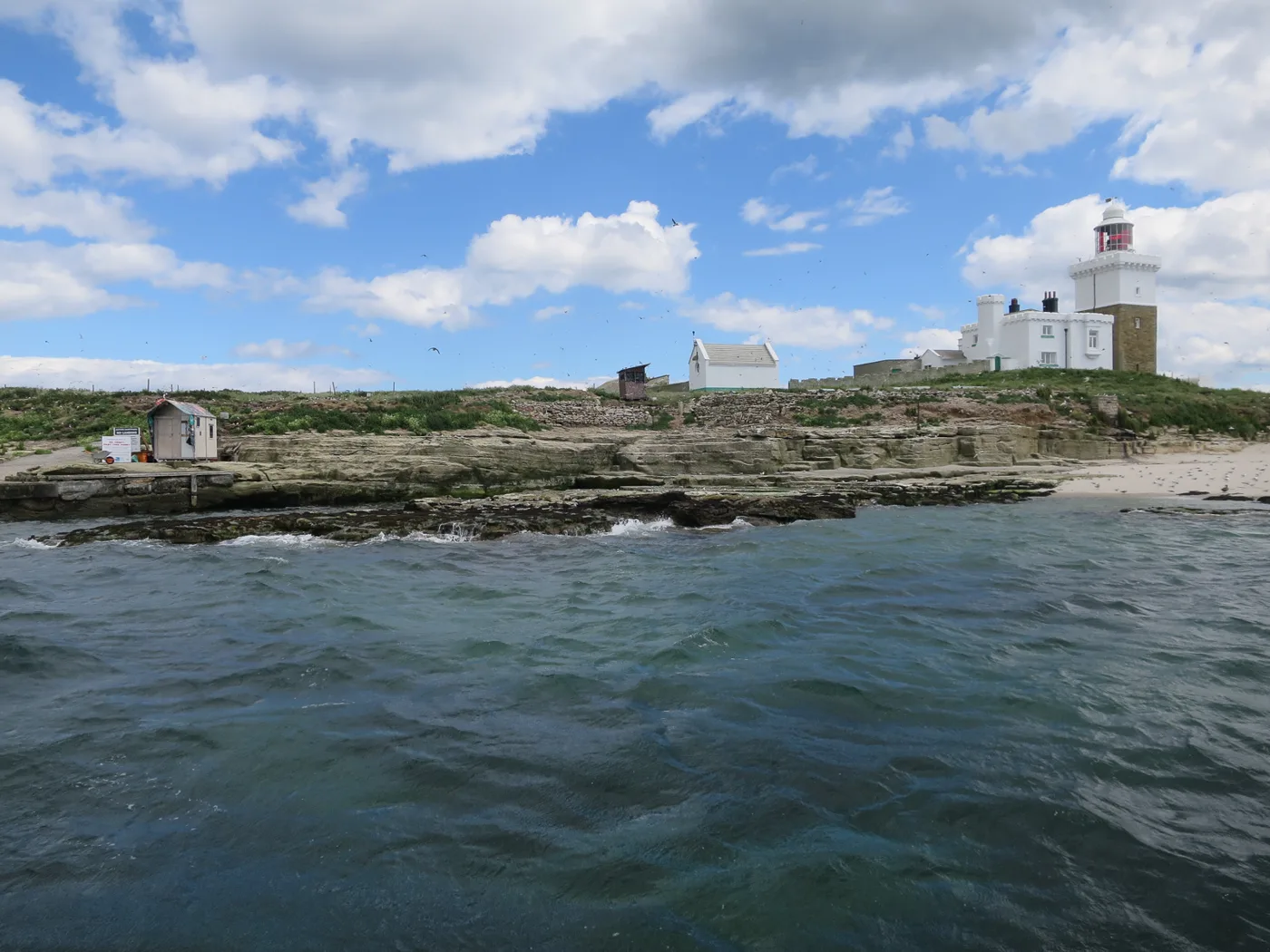

Six pilot whales from a pod of about 40 seen off Warkworth died on the rocks of Coquet Island. What rescuers tried, and who to call if you see one.
Six pilot whales have died after stranding on the rocks of Coquet Island, off Amble. They were part of a pod of about 40 that rescuers saw in distress off Warkworth on Sunday 20 September.
British Divers Marine Life Rescue (BDMLR), the charity that led the rescue, confirmed on Tuesday 22 September that all six were dead. A team including a vet had returned to the island that morning to assess each animal (BDMLR).
BDMLR says all six appear to have been female, a mix of adults and juveniles.
What happened, day by day
Sunday 20 September. BDMLR was alerted late in the afternoon to a pod close to shore off Warkworth. It counted about 40 whales, “behaving in a distressed manner typically seen prior to a stranding event”. Medics went out on local boats to try to herd the pod out to sea.
The whales did not respond. Several stayed packed around one of the largest animals, which was lying motionless on its side. The attempt was stood down when it got dark.
Monday 21 September. There was no sign of the pod at first. Then RSPB staff on Coquet Island reported that up to a dozen whales might be stranded on its rocky ledges. Rescuers found six: five ashore and one afloat. Two of the stranded animals were already dead.
The charity says access to the island is limited to a couple of hours either side of high water, and nobody can stay overnight. Medics tried to refloat the live whales. The terrain, the size of the animals and the falling tide made it unsafe, and they had to withdraw.
Tuesday 22 September. The team returned with a vet and confirmed all six had died. Spotters with licensed drones, and aircraft from Civil Air Support, searched the coast for the rest of the pod. By Tuesday afternoon there had been no further sightings.
BDMLR thanked the RSPB team, Puffin Cruises, which took rescuers and equipment out to the island, and Civil Air Support.
Not the Thames pod
A separate pod of pilot whales was herded out of the River Thames the same weekend. BDMLR says the Northumberland animals are a different group. A pilot whale could not swim that distance in 24 hours, and far more animals were involved here.
What happens next
Where conditions allow, the dead whales may be recovered for post-mortem examination by the Cetacean Strandings Investigation Programme (CSIP). BDMLR says its scientists arrived on 22 September. The results may help show why the pod got into difficulty.
The CSIP has run since 1990 and is funded by Defra and the devolved governments. It records every whale, dolphin and porpoise stranding in the UK and examines a proportion of them (CSIP).
BDMLR has published no further update since Tuesday afternoon. We will add the post-mortem findings when they are released.
What it means for you
The rest of the pod had not been seen again by Tuesday afternoon, and BDMLR’s spotters are still watching the coast. If you walk the beaches around Amble and Warkworth, this is who to call:
- A live whale, dolphin or porpoise at sea close in, or stranded: BDMLR’s 24-hour hotline, 01825 765546. BDMLR is specifically asking for sightings of pilot whales in the area.
- A dead one on the beach: the CSIP on 0800 652 0333 (how to report a stranding).
- The RSPCA also takes live strandings in England, on 0300 1234 999.
If you are walking the same beaches, the council’s nurdle clean-up drop-off points run from Amble Dunes to Cresswell.
Sources
- British Divers Marine Life Rescue: Pilot Whale Mass Stranding, Northumberland, original post 21 September 2026 and update of 22 September 2026, 14:30, for every detail of the rescue and its outcome.
- UK Cetacean Strandings Investigation Programme and its reporting page, for the programme’s background and the hotline numbers.
Have your say